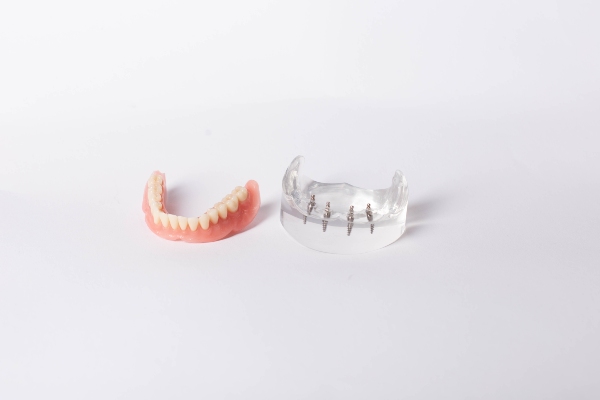
 Walking around with an incomplete smile can impact multiple areas of your life, from confidence and oral health to diet and function. Fortunately, All-on-4® can help whether you are missing all or most teeth. Here is a closer look at the details of this popular restoration option.
Understanding the details of All-on-4
All-on-4 or "all-in-4" are four to six dental implants inserted into the upper or lower arch of a patient's mouth. The technology behind this set of implants supports a full arch of artificial teeth or dentures. This restoration is popular among dental professionals and patients because it is a permanent solution to missing teeth while simulating a natural appearance.
Furthermore, patients need a full set of false teeth for multiple reasons. However, it can be disheartening for one to have to constantly remove false teeth to clean them or have a complete smile. With the All-on-4 implants being permanent, this concern is taken away. The only thing patients will need to do, regardless of their age, is pass the candidacy process.
The candidacy process
Due to everything involved in the All-on-4 process, each patient must pass the candidacy process. Patients will need to meet the following standards:
- A non-smoker or does not consume tobacco of any kind
- Free from disease, infection, or inflammation
- Missing all or most of their teeth on either arch
- No underlying health conditions that inhibit healing
- Sufficient amounts of healthy alveolar bone
If one does not meet all these standards during the initial consultation, the periodontist can make treatment recommendations before re-screening them for All-on-4. For example, a bone graft may help those lacking adequate bone density; treatments can clear abscesses or early stages of gum disease. After these treatments, the patient can reschedule a screening and likely be approved for All-on-4.
The All-on-4 process
After approval, it is important to know that patients will embark on a long process, between six and nine months. The main reason the process is so long is due to the healing phases. The first appointment will involve placing the titanium dental implants, which look like screws, into the jawbone. These dental implants will act as an anchor for the abutment, which will be placed later. The periodontist will need to cut through the gumline and into the jawbone. To finish, they will likely place a removable prosthesis to protect the implants while the patient enters the three-month osseointegration process. This process is for healing and allows the jawbone to fuse with the dental implant.
The next surgical procedure will be to place the abutment on the implant. This will only involve cutting through the gumline. Therefore, the following healing phase will only last for a short time. During the last appointment, the custom false teeth will be affixed to the abutments, giving the patient a permanent natural-appearing smile.
We can restore your smile
Whether you are missing all your teeth or the majority, our team can restore your smile. All-on-4 is an option for those wanting a permanent fix. Contact our office to see if you are a candidate.
Request an appointment or call Periodontal & Implant Specialists at 239-791-7667 for an appointment in our Fort Myers office.
Related Posts
All-on-4® dental implants are permanent full-arch restorations. This alternative to dentures restores the teeth without the use of a removable device. Instead, All-on-4 functions like real teeth, providing various benefits beyond simply restoring one's smile. Here are a few pros and cons of All-on-4 implants.Dental implants are screwlike posts that act as replacement tooth roots.…
All-on-4® restorations have titanium rods that fuse with the jawbone and gum tissue. The procedure will result in non-removable restorations. You cannot remove the implants yourself. Here are the details on how All-on-4 implants are permanent dental restorations.The absence of teeth can be challenging when it comes to speaking or eating. It can reduce one’s…
All-on-4 dental implants are an effective way to replace an entire row of missing teeth. The treatment process has two parts, starting with the actual dental implants, carefully placed evenly throughout the upper or lower arch of teeth. We place four implants during surgery, and after a few months of healing, the periodontist can fit…